Off-the-shelf products rarely match how a business actually operates. At Small Pea Software, based in Chatswood NSW, we design and build custom software that reflects your workflows, terminology, and decision-making — not the other way around. Whether you need a replacement for ageing internal tools or a new system to support a growing operation, bespoke development gives you software that fits.
When Custom Software Makes Sense
Custom development is the right path when your processes are genuinely distinctive, when multiple systems need to work together in a specific sequence, or when packaged software forces compromises that create daily friction for staff. We often speak with NSW organisations that have outgrown spreadsheets, patched together several SaaS subscriptions, or inherited a legacy application that no longer matches current operations.
Consider bespoke software if your team spends significant time on workarounds, if reporting requires manual exports and reconciliation, or if regulatory or contractual obligations require controls that generic products cannot provide. Custom does not mean unlimited scope — it means building exactly what you need, with clarity about what you are not building yet.
Common Challenges We See
- Unclear requirements — stakeholders describe outcomes differently, and scope grows without a shared picture of priority.
- Legacy dependency — critical data lives in old databases or file formats that must be migrated carefully.
- Integration gaps — the new system must exchange data with accounting, CRM, or industry-specific platforms already in use.
- Adoption risk — staff resist change when interfaces feel unfamiliar or duplicate existing manual steps.
- Long-term ownership — organisations worry about who maintains the code after the initial project ends.
Our Approach to Bespoke Development
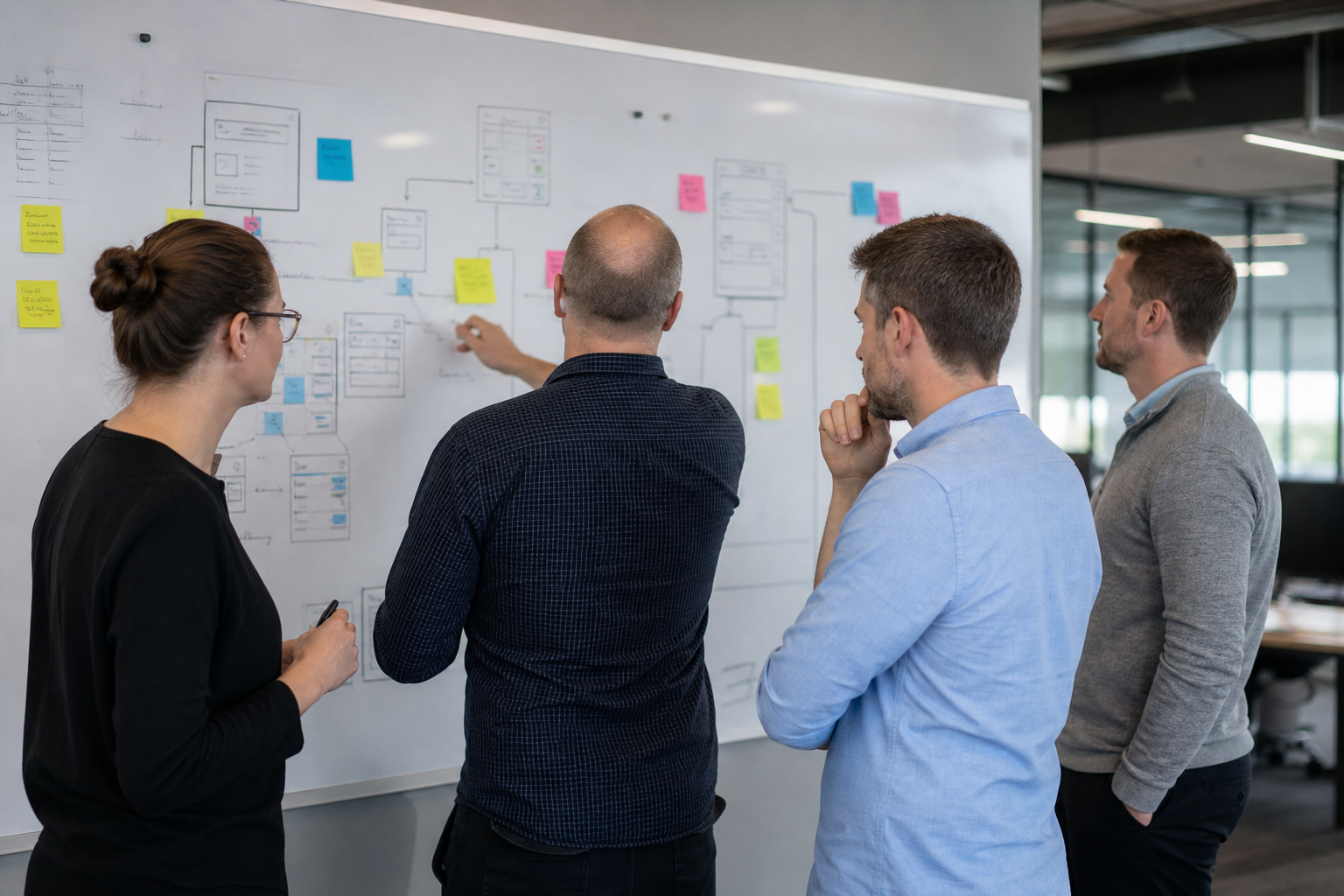
We start with structured discovery: mapping current workflows, identifying pain points, and separating must-have capabilities from desirable enhancements. That work produces a written scope and delivery plan before significant development begins, so expectations stay aligned throughout the project.
Development proceeds in defined phases with review points. You see working software early enough to confirm direction, not just wireframes. We favour maintainable architectures, sensible documentation, and code that another competent developer could pick up — because your system should remain viable for years, not just at launch.