
A commercial HVAC maintenance provider with sixty field technicians across metropolitan Melbourne and Geelong coordinated schedules through whiteboards, text messages, and a legacy calendar tool that could not respect skill matrices or travel time realistically. Small Pea Software delivered a scheduling and dispatch platform with drag-and-drop planning, mobile job execution, and SLA-aware reallocation when emergencies disrupted the day.
Client Context
The provider holds service contracts with shopping centres, healthcare facilities, and education campuses requiring response windows measured in hours for breakdown calls and tight preventative maintenance cycles otherwise. Planners spent each morning rebuilding routes after overnight emergencies, often double-booking technicians with specialty certifications. Technicians received job details through SMS fragments without asset history or prior visit notes.
Client SLAs included financial penalties for missed response targets on critical assets. Management lacked forward visibility into capacity — hiring decisions were reactive. A generic field service app was piloted but could not model union break rules, apprentice pairing requirements, or client-mandated escort procedures for certain sites.
Problems to Solve
Mean time to assign emergency jobs exceeded ninety minutes during peak summer periods when concurrent breakdowns spiked. Preventative maintenance backlog grew because break/fix work preempted scheduled visits without systematic rescheduling. Technicians returned to depot for paperwork that could have been captured on site, reducing billable hours.
Customer updates were inconsistent — some account managers phoned clients, others assumed silence meant progress. Invoice delays followed when job completion data lacked parts used, time on site, and client sign-off signatures required by contracts.
Technical Approach
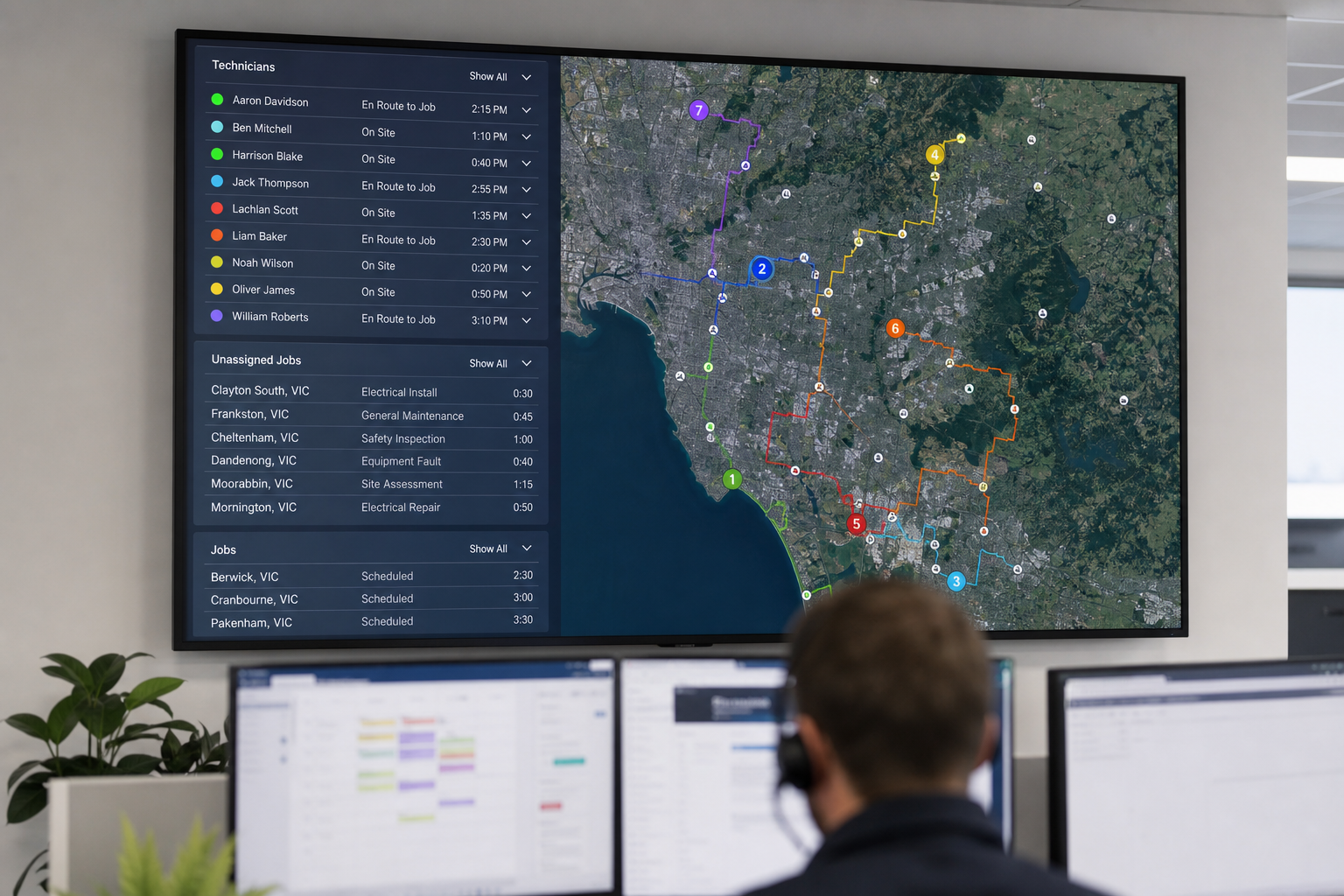
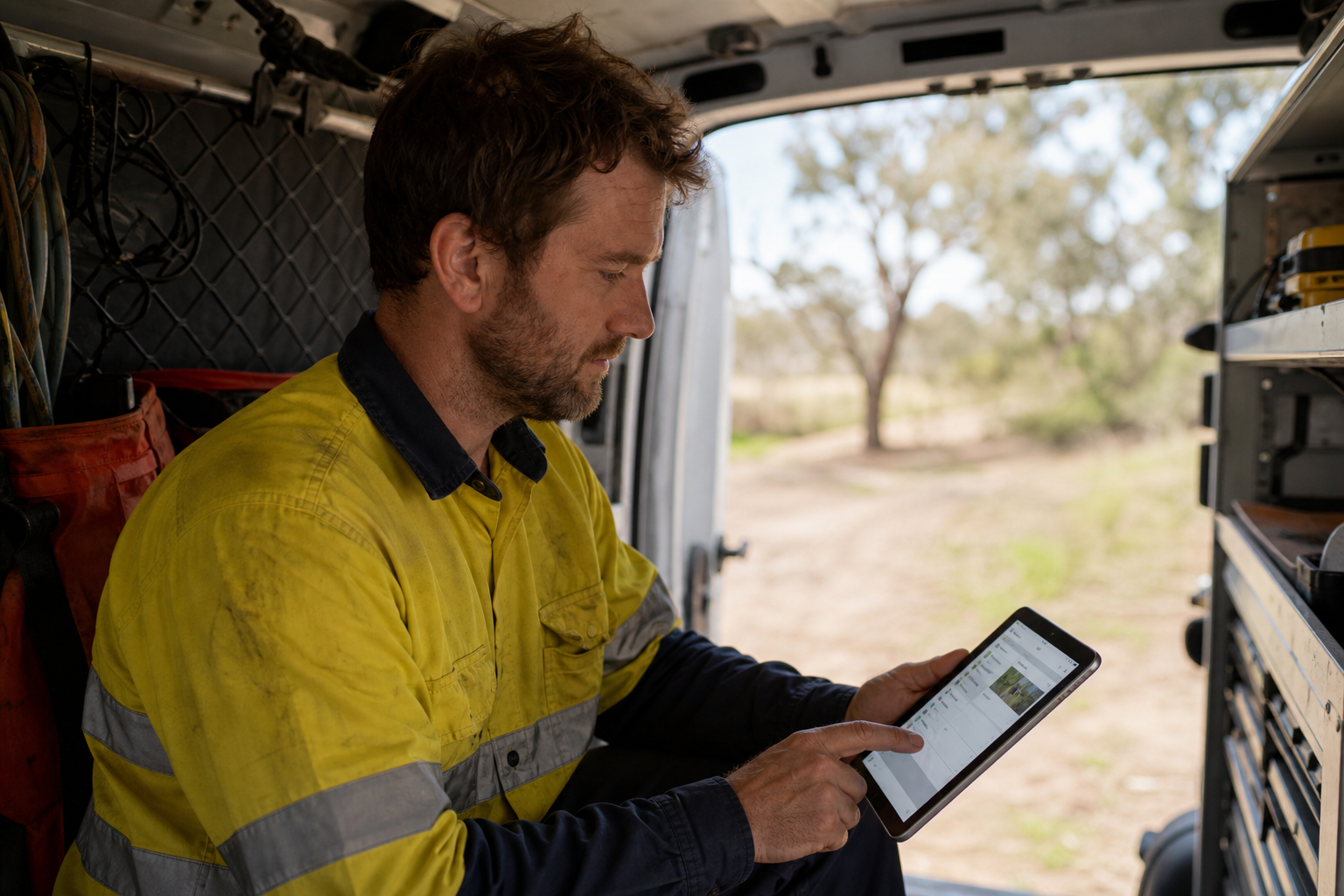
We built a planner web application with timeline and map views, optimisation suggestions based on skills, parts on van, and drive time using routing APIs with traffic profiles. Technicians use a mobile app showing job packs, asset history, checklists, parts consumption, photos, and client signature capture with offline support in basement plant rooms with poor signal.
Integration syncs completed jobs to the finance system for invoice line generation and updates the CRM with service notes for account managers. SLA engine tracks response and resolution clocks per contract tier, escalating at eighty percent threshold to dispatch leads. Emergency insertion workflow ripples affected jobs into suggested reschedule slots planners accept or adjust.
Challenges
Optimisation suggestions initially ignored client access windows — chillers reachable only before 7 am at food retail sites. We added hard constraints per site profile and soft penalties for undesirable but permissible times. Technician trust in suggested routes required transparency showing why a job was assigned, not a black-box algorithm.
Parts catalogue sync from warehouse systems lagged during stocktake weeks; mobile app graceful degradation let technicians record parts used for later reconciliation rather than blocking job closure. Change management for planners accustomed to manual control used phased automation — suggestions only, then optional auto-assign for overnight low-priority PM batches.
Solutions Delivered
Dispatch board supports drag reassignment with live SLA impact preview and automatic customer notification templates when ETAs shift beyond agreed buffers. Technicians receive structured job packs including risk assessments, isolation procedures, and linked prior defect photos. Client portal optional module lets facility managers track open visits and approve completed work orders electronically.
Reporting covers first-time fix rate, travel-to-work ratio, SLA compliance by client tier, and technician utilisation adjusted for paid breaks. Preventative maintenance scheduling forecasts capacity requirements twelve weeks forward based on contract obligations and historical job durations.
Measurable Outcomes
Emergency job assignment time dropped from a ninety-minute average to twenty-two minutes during the first summer season after rollout. SLA breach rate on P1 contracts fell from seven percent to two percent quarter-on-quarter. Technician admin time at depot decreased by an estimated five hours per tech per fortnight through mobile capture and digital sign-off.
Preventative maintenance completion within scheduled month improved from seventy-eight to ninety-four percent, reducing contractual exposure on maintenance KPIs. Invoice cycle from job completion shortened by 1.8 days on average due to structured parts and labour data flowing directly to finance. The provider expanded the platform to Geelong technicians and retained Small Pea Software for seasonal capacity tuning and CRM integration enhancements.
Planners reported that transparent assignment reasoning — showing skills, travel, and SLA impact — mattered as much as the optimisation algorithm itself. Technicians stopped calling the depot for job context when asset history and prior defect photos arrived on the mobile job pack. Client facility managers who adopted the optional portal module reduced status-call volume to account managers during summer breakdown peaks.